Garden Map

Interactive Garden Map

1
2
3
4
5
6
7
8
9
10
11
12
13
14
15
16
17
18
19
20
21
22
23
24
25
26
27
28
1

Koi Pond

2

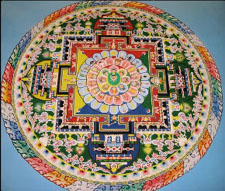
Buddhist Sand Mandala of Compassion

news-header2

3

Thai Spirit House

thai

4

Kabalah (Jewish) Tree of Life

jewish

5

Buddhist Shrine

20150607_135208

6

Buddhist Sand Mandala of Healing

1sand

7

Kwan Yin (Taoist)

DSC00186 (2)

8

Galaxy Garden (Astronomy)

3a-galaxy-gardenb

9

In old Hawai’i water was collected from the drips in certain caves and shared to sustain life. Paleaku has a honeycomb of sacred caves beneath its surface and its name given by the Kahunas means protective covering.  This statue represents the ancient Spirit of Strength as she pours the life giving water of peace into the world. Her request is to:  Remember the Strength of the Feminine.  E’ho’o mana’o a na no Ikaika Wahine Ikaika.

Ikaika Wahine (Hawaiian)

10

Green Tara (Buddhist)

homeslide3

11

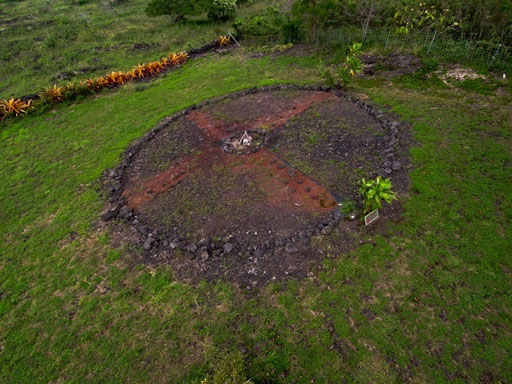
Medicine Wheel (Native American)

The medicine wheel at Paleaku was inspired by Domine Cappadonna and constructed in 1997 by a group of women engaged in a year long process. It was created from Pele's (Hawaiian Volcanic Goddess) cinder quarry of many colors and sea-sculpted coral sand. The Center axis pole representing the connection of Heaven and Earth is a sandlewood tree from the upland Forest. As a symbol of wholeness, it is found in worldwide cultures, and is especially utilized by almost all the Native people of North and South America. As an Earth mandala or circle, it is used to display and inspire the wisdom of our inner and outer teachers. The heaven above, the Earth below and the four compass points bring the winds of different qualities and elements into our lives. A Medicine Wheel is both a map of the mind and a path of life.

12

Labyrinth

The local community was invited on Mother's Day, 1996, to create this classical 50 foot red and black lava rock labyrinth. It is named the Mother of Creativity. Long used for transformational practices, walking the labyrinth affects the energy meridians, including the neural pathways of the brain.

13

Fire Circle

Created in the mid 1990's this One Heart Fire Circle was inspired by Roy Little Son who carried the medicine of the native American Hopi Indian Tribe.It was thru his understanding of their traditions that a ceremony was done to honor women and their role as Fire Starter. The medicine of the fire was carried from the Volcano to the center rock in the middle of the circle named the Ascension Stone.

14

Kalachakra Stupa (Buddhist)

This Kalachakra Stupa is a Spiritual Monument of Tibetan Buddhism. In 1988 a dream of Desiree Gaspar’s inspired her to ask His Eminence Tai Situpa Rimpoche for his support in building this Stupa. Under his direction and with the help of the Venerable Lama Sonam Tenzin the Stupa was constructed. In a ground- breaking ceremony in 1989, His Eminence Jamgon Kongtrul Rimpoche buried the Treasure Vase Offering at the site. Upon completion in 1991, Venerable Bokar Rimpoche dedicated the Stupa to the Very Venerable Kalu Rimpoche, who inspired the founding of Paleaku Peace Gardens. Kalachakra means Time-Wheel and a Stupa symbolizes enlightened mind. A Stupa is like a generator sending blessings of harmony and peace in all directions. The shape of the Stupa represents the Buddha, crowned and sitting in meditation posture on a lion throne. His crown is the top of the spire; his head is the square at the spire’s base; his body is the Dome shape; his legs are the steps of the lower terrace; and the base is his throne. The Stupa also symbolizes the five elements and their relationship to enlightened mind. The base of the Stupa signifies earth and equanimity; the dome, water and indestructibility; the spire, fire and compassion; above the spire, wind and all-accomplishing action; and at the very top, the jewel represents space and all-pervading awareness. The Stupa is a mandala, or sacred arrangement, containing all of these enlightened qualities. “The visual impact of the Stupa on the observer brings a direct experience of inherent wakefulness and dignity. Stupas continue to be built because of their ability to liberate one simply upon seeing their structure” Chogyam Trungpa Rinpoche

15

Bodhi Tree

The Bodhi Tree, planted at Paleaku in 1988, came from an air layer of the decendant of the tree that is now growing in Bodhgaya, India. This small sappling was prepared and donated by Doctor Daniel Susott. The historic Buddha Shakymuni sat under the Bodhgaya Bodhi Tree until He attained Enlightenment.

16

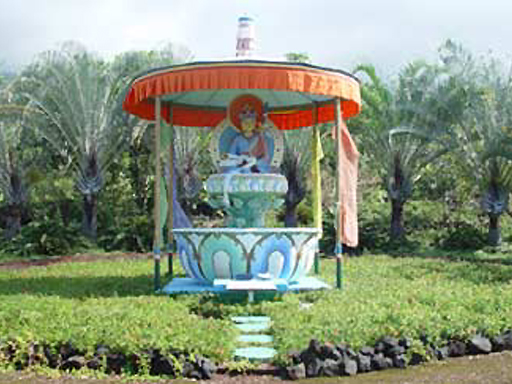
Padmasambhava (Buddhist)

This Tibetan Buddhist Shrine at Paleaku depicts Guru Padmasambhava, the founder of Vajrayana Buddism in Tibet, 8th century. The statue was designed by Lama Tarchin Rimpoche and built in the 1990 by the Vajrayana Sangha and friends.

17

Rosicrucian (Christian)

The Christian Installation, designed by Catherine Rathbun, was built and dedicated at Paleaku Peace Gardens, on Palm Sunday, 1995. The installation grew from the idea of viewing the evolution of the Christian teachings within their historical context and honoring the arising of the remarkable teacher, Jesus of Nazareth. Click on Christian Installation for more information.

18

Our Lady of Guadalupe

Lady of Guadalupe (Catholic)

19

Peace Poles

c

20

Nine Pointed Star (Baha’i)

Baha'i 9-Pointed Star. There are many reasons the number nine has significance in the Bahá'í Tradition. In 19th century Persia the forerunner prophet, Báb,

21

Shiva Shrine (Hindu)

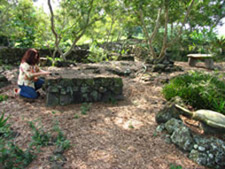
Swami Shankarananda, while living at the gardens in the 1994 was inspired to honor his Guru and Hindu dharma. He had brought the Lingam (the egg shaped stone that sits upon the round rock wall) from India. This stone had auspiciously appeared to at the Jalasamadhi of his teacher, Swami Vishnu Devananda. Jalasamadhi is a ceremony honoring “the merging of the abandoned body with the water.” Swami Vishnudevananda was a disciple of the great modern saint H.H. Swami Sivananda Saraswati of Rishikesh, India, and was the founder of the International Sivananda Yoga Vedanta Centers and Ashrams, with branches throughout the world. Swami Vishnudevananda was a tireless peace activist. The lingam represents the male creative energy of Shiva, one of the main Deities of Hinduism. Shiva is most often worshiped in the iconic form of a Lingam. The Lingam always rests in the Yoni, the female creative energy. Shiva is considered the Deity of Transformation. The stone carving depicting Shiva’s head was added in 2001 and is from Bali. Over the years visitors have placed small statues of Ganesh, the Hindu Deity who removes obstacles, upon the rock wall. On the left of the shrine you can see the rock formation of a serpent winding around the tree, an image also associated with Shiva. In the front is a small square rock arrangement used for fire pujas or ceremonial offerings. The Angel Trumpet plants that surround the tree are also associated with Shiva and are toxic if ingested. Traditionally water is poured onto the top of lingam stone. A vase of water and a ladle are provided. While pouring water onto the Lingam one can chant: Om Namah Sivaya (Salutations to Lord Shiva)..

22

Islamic Shrine

The Islamic Shrine was designed by Faisal Muqaddam. Traditional and mystical symbols of Islam are used to honor the teachings of Allah.

23

Aumakua (Hawaiian)

turtle

24


Cave Petroglyphs

25

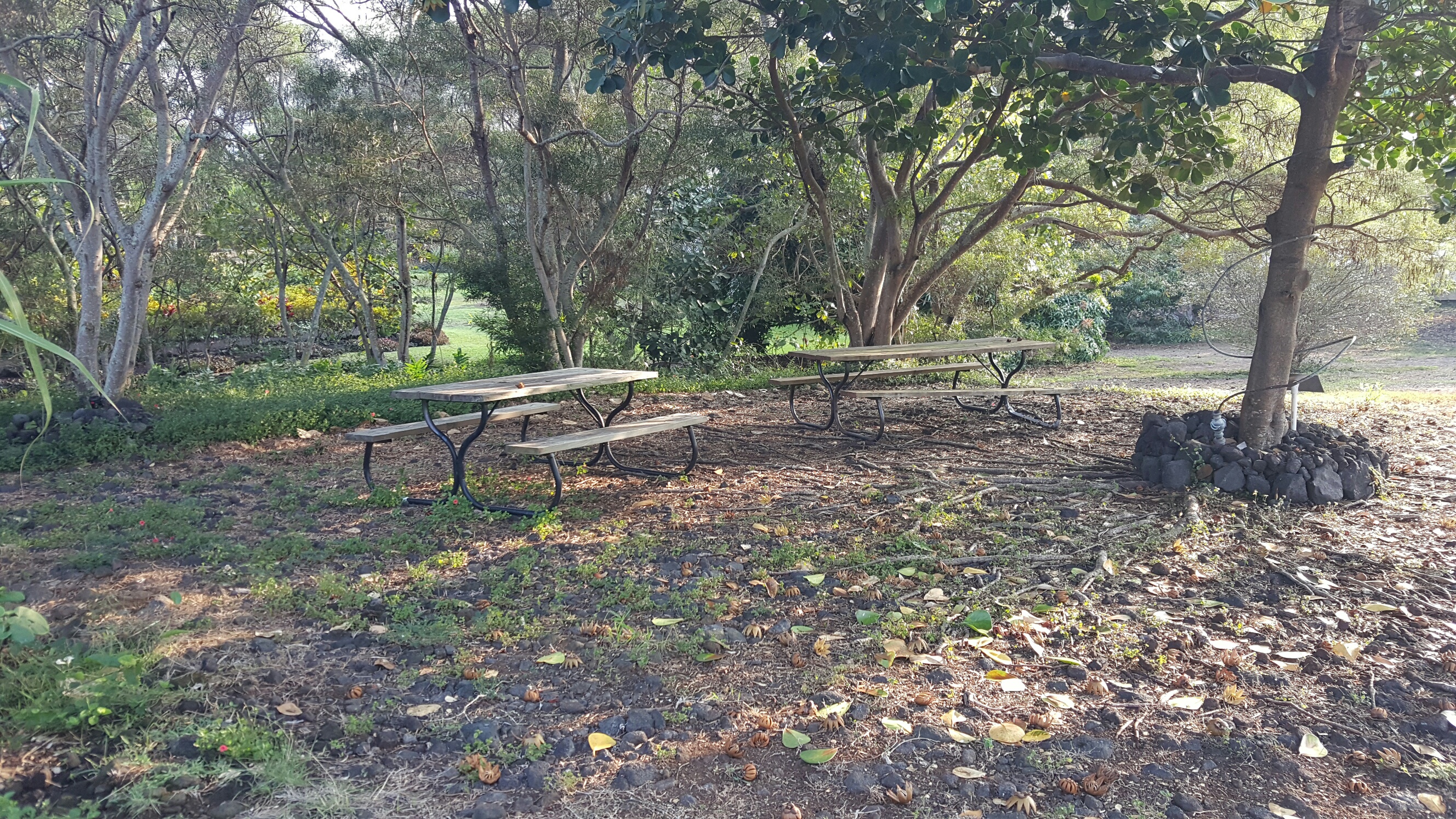
picnic area

Picnic Area

26

Movement Room (Yoga)

mh2

27

Resource Room

m4

28

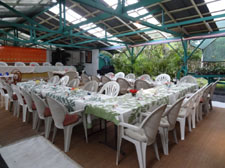
Covered Eating Area

dining3b

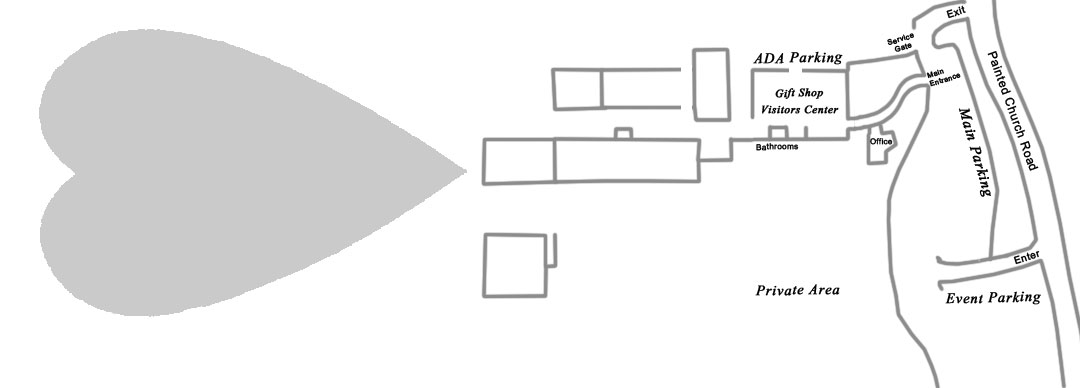
This page offers you the over view perspective of what you will see when you tour Paleaku. When you visit us, your walk through our extensive gardens will begin at the Visitor Center.  We have small shrines and larger garden shrines.  Paths lead you to private sitting spaces and shrines of the major world religions, creating peaceful places for reflection.  The temperate climate and lush foliage and flowers create an ideal location for year-round visits. Click here if you would like to take a virtual tour of the gardens.